

Canada is known for it’s stunning wildlife, rugged landscapes and natural wonders.
All the travel magazines talk about Niagara Falls, the Great Lakes, and the wild Rocky Mountains, but there is so much more to this country and the people who built it.
From towering skyscrapers to engineering marvels that have shaped the nation’s transportation and growth, there are many places where you can see the contributions humans have made to the fabric of the Canadian landscape.
Coast to coast, hundreds of man made icons stand strong— Tributes to local and national culture and industry, architectural wonders and wild feats of engineering —all carry their own significance in the Canadian story.
Here are 10 man made places that you need to add to your next Canadian road trip!
1. Peterborough lift lock
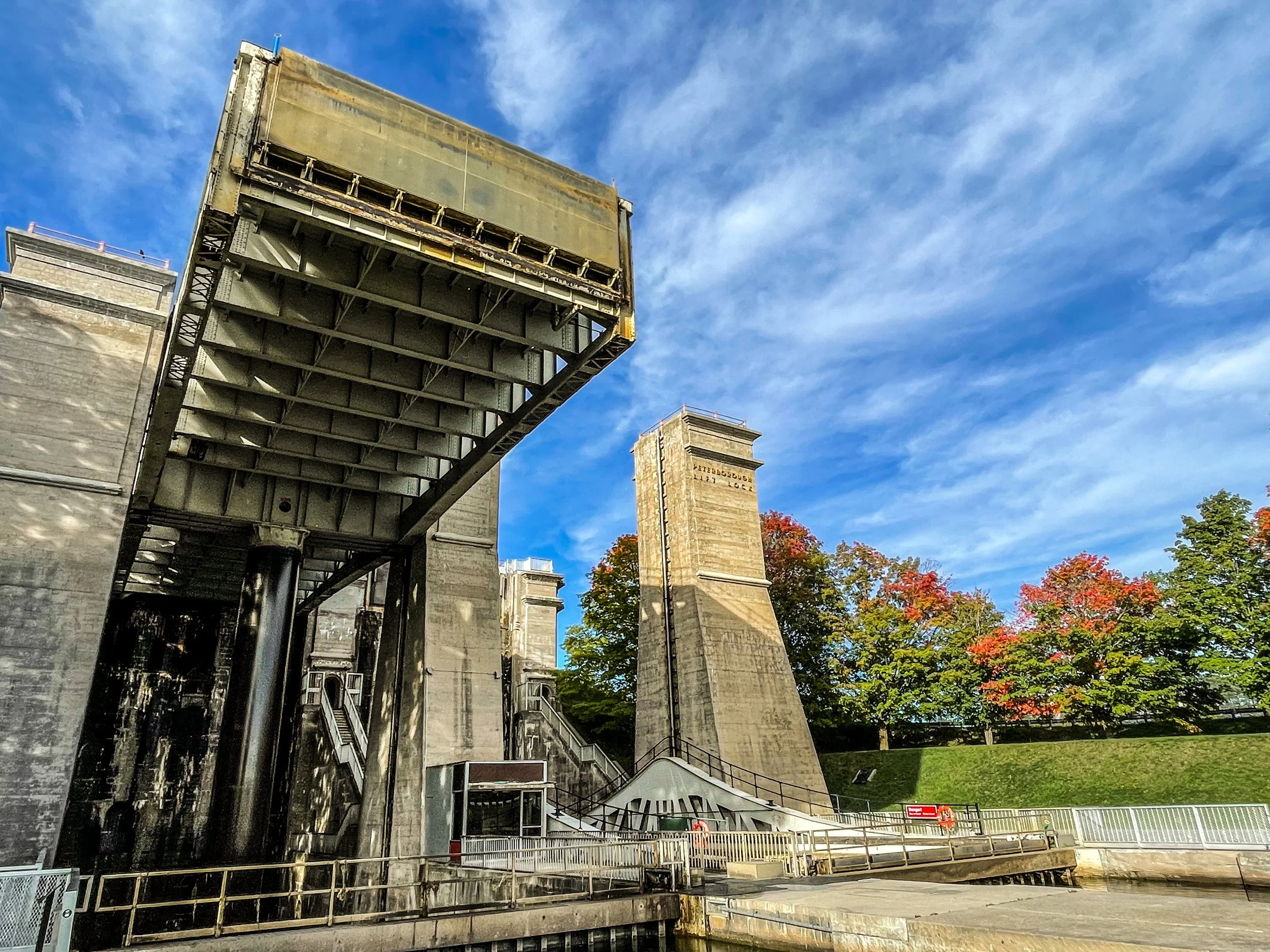
The Peterborough Lift Lock (Lock 21) on the Trent Severn Waterway in Southern Ontario is definitely one of the coolest stops as you pass through the Kawarthas, a cottage region northeast of Toronto.
Whether you’re on a Kawartha cottage vacation or just taking a pitstop off the Highway 7 stretch of the Trans-Canada Highway, you have to check out the Peterborough Lift Lock.
This place is honestly incredibly impressive. A massive achievement in engineering, the Lock lifts and lowers boats 65 feet, in a single, effortless motion.
How?
The design is actually pretty simple. Two massive steel water chambers (pretty much giant bath tubs) rest on giant hydraulic rams connected by underground pipes.
Basically, the boats enter one chamber, while the other respectively either drains or fills with water from the river, using gravity to lift or lower the boat, and sending it merrily on its way.
After eight years of construction, the Lock opened in 1904. At the time, it was the highest hydraulic lift lock in the world and today is a National Historic Site.
Although the Lock was originally built with a vision for trade and travel, by the time it came from vision to reality, the railway and road improvements made it less necessary for it’s original intention.
Although the Lock does see commercial traffic, it has become a major travel route for boaters and vacationers exploring the Trent Severn Waterway.
Even if you don’t care about the engineering aspect of the Lock, this spot is still a great outdoor destination, where you can picnic in the park, enjoy the sunshine and watch the boats pass by.
2.confederation bridge
There are many ways to cross the ocean. By ferry, by plane, perhaps two swallows could carry you on a line like a coconut. All good options. There is, however, one more choice.
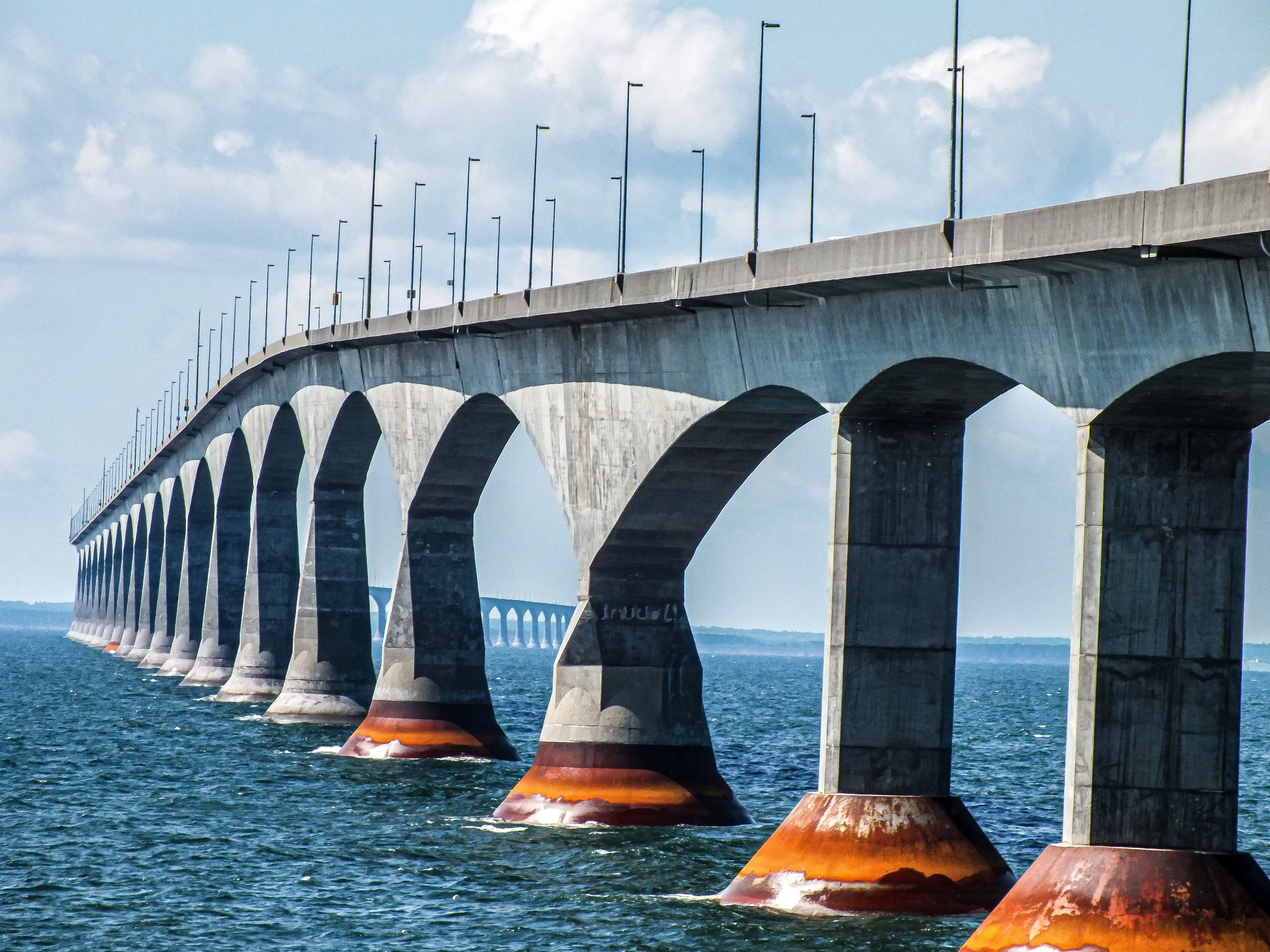
The Confederation Bridge, connecting Prince Edward Island to mainland Canada, spans nearly 13 kilometres across the North Atlantic Ocean.
The Trans Canada Highway runs across the bridge, from the coastline of New Brunswick to the shores of PEI. Crossing the bridge with the windows down, you are treated with fresh Atlantic air and stunning views of the Northumberland Strait.
The bridge itself is a masterpiece, both visually appealing and structurally ingenious.
Built in the mid nineties with high performance concrete, the red cones at the surface of the water are actually designed to break ice and keep the structure safe, even in the harsh winters.
In fact, it is the longest bridge in the world that runs over ice covered waterways.
While you don’t have to pay a toll on your way into PEI, they do make you pay one on your way out (that’s one way to try to grow your population!) The fee is about $20 per standard size vehicle.
While one, never needs a reason to visit the peaceful Prince Edward Island, crossing this bridge is certainly one of them.
If you are travelling through Eastern Canada, make sure to check this one off your bucket list!
3. Mac the moose
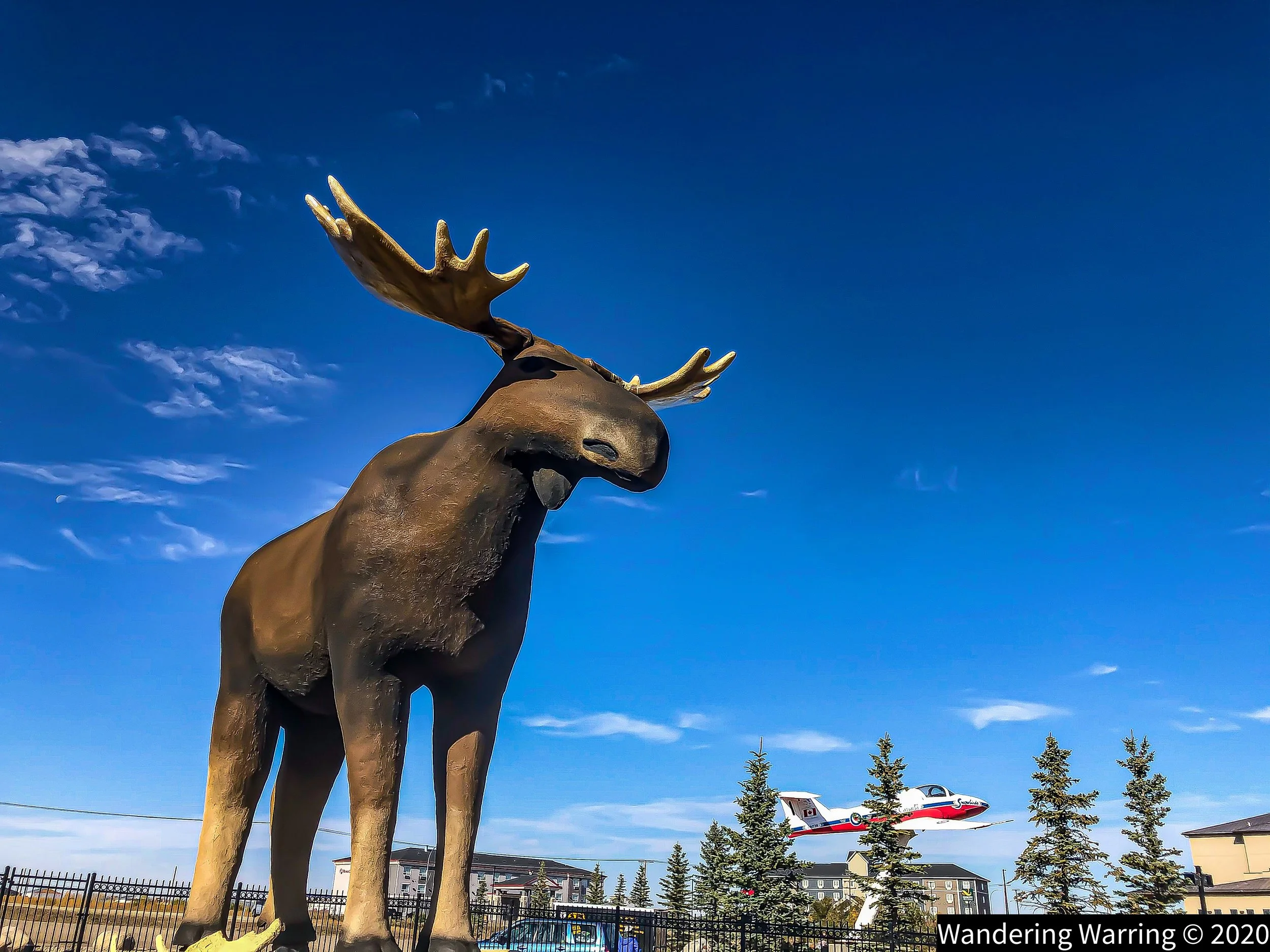
“Mac The Moose” stands tall and proud over the prairies in Moose Jaw, Saskatchewan.
The Trans Canada highway is a popular route for roadside icons. There is no exception here. As you pass through Saskatchewan on Highway 1, nearly an hour west of Regina, you come across a highway rest stop area.
The Tourism Moose Jaw Visitor Centre, your best stop to get info on all the great local attractions (learn some Al Capone legends and tour prohibition bootlegging tunnels!) is a great place to stretch your legs and get a look at this giant moose.
Mac towers over the rest stop, posing for pictures against the backdrop of prairie skies. This dude is 34 feet tall and weighs 10,000 kgs, which, honestly, doesn’t seem that far off from a real living moose (They’re freakin’ huge too!)
Commissioned by the city of Moose Jaw to help boost tourism, Mac was created by Saskatoon artist Don Foulds in 1984.
For 30 years, Mac stood steady against the prairie winds, harsh snows and stormy skies, proudly the tallest moose statue in the world.
(Isn’t it the only moose statue in the world?) Funny you should ask that. Actually, no, it isn’t.
In 2015, a feud with Norway became the talk of CBC news. A truly Canadian feud. Evidently, their statue Storelgen, or‘Big Elk’, surpassed Mac by approximately 30 centimetres.
Any proud Canadian knows we could never just let this slide. in 2019, Moose Jaw residents rallied to reclaim their crown. A crew removed and replaced Mac’s antlers, with a larger set, reaching higher into the sky and reclaiming their proud title of world’s tallest moose statue.
So if you find yourself tavelling through the heart of Saskatchewan, make sure to stop and introduce yourself to the world’s tallest moose!
4.Canadian Pacific Railway
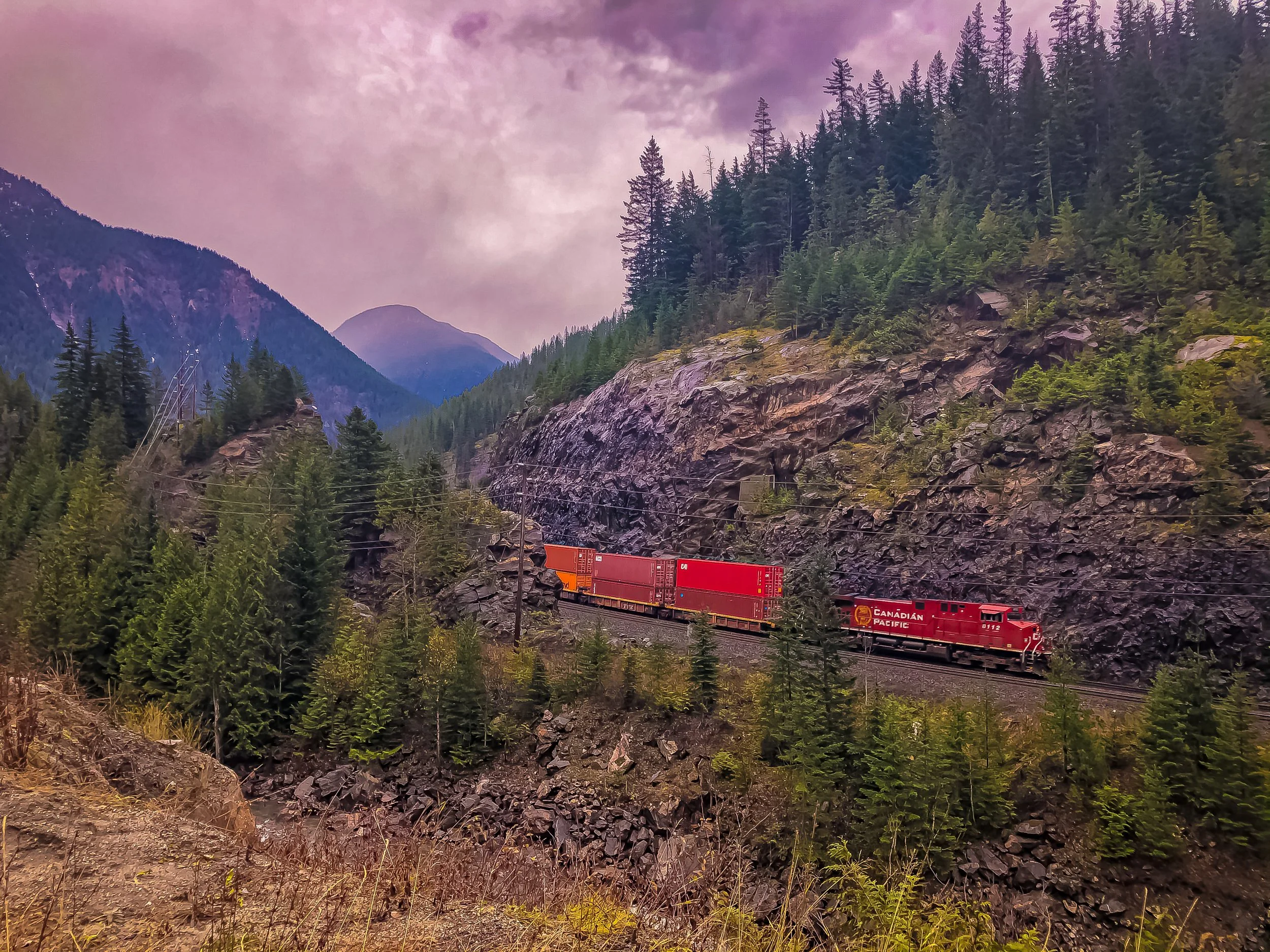
Now, this landmark, this one’s the most important one on this list. In fact, it’s probably the most important man made structure in Canada.
This is the structure that built the country, connecting us coast to coast, allowing us a trade and travel route that was necessary to build a nation.
It might not seem like much to look at any given spot along the railroad. (What’s the big deal? It’s just a train track.) Usually, the train track is outshined by the wilderness surrounding it anyway.
No. It’s not just a train track. And the wilderness surrounding it? That’s what makes it so damn impressive. I mean, the labor conditions in which it was built were, well, horrible. But John A. MacDonald’s vision connected Canada from coast to coast long before roads ever did.
The railroad made cross country travel not only possible, but efficient, and I mean, god damn magnificent. So magnificent in fact, that many people pay thousands of dollars to get cozy in a train car and ride the rails clear across the country.
Through the flatness of the prairies to the wild mountains of Rogers Pass, enjoy stunning views from rugged Canadian landscape.
This phenomenal feat of human work, willpower and engineering, not only improved Canadian travel, it made the development of Canada possible through unprecedented trade and travel efficiency.
So next time you’re stopped at a flashing railway crossing, don’t focus on the inconvenience of having to wait. Instead, think about the effort it took to build the railway and the massive impact it had on this country.
Before the creation of the railway, your options were on foot, on horseback, or by canoe, and honestly, as fun as that sounds, it would have taken forever.
Thousands of people struggled their way across the country, carrying their whole lives on their backs. The trek was treacherous, lots of people died along the way.
The Canadian Pacific Railway is a landmark that built a nation.
Plan yourself a train trip across Canada. Take in the views, the history, the story of Canada.
You’ll thank me later.
5. The Fortress of Louisbourg
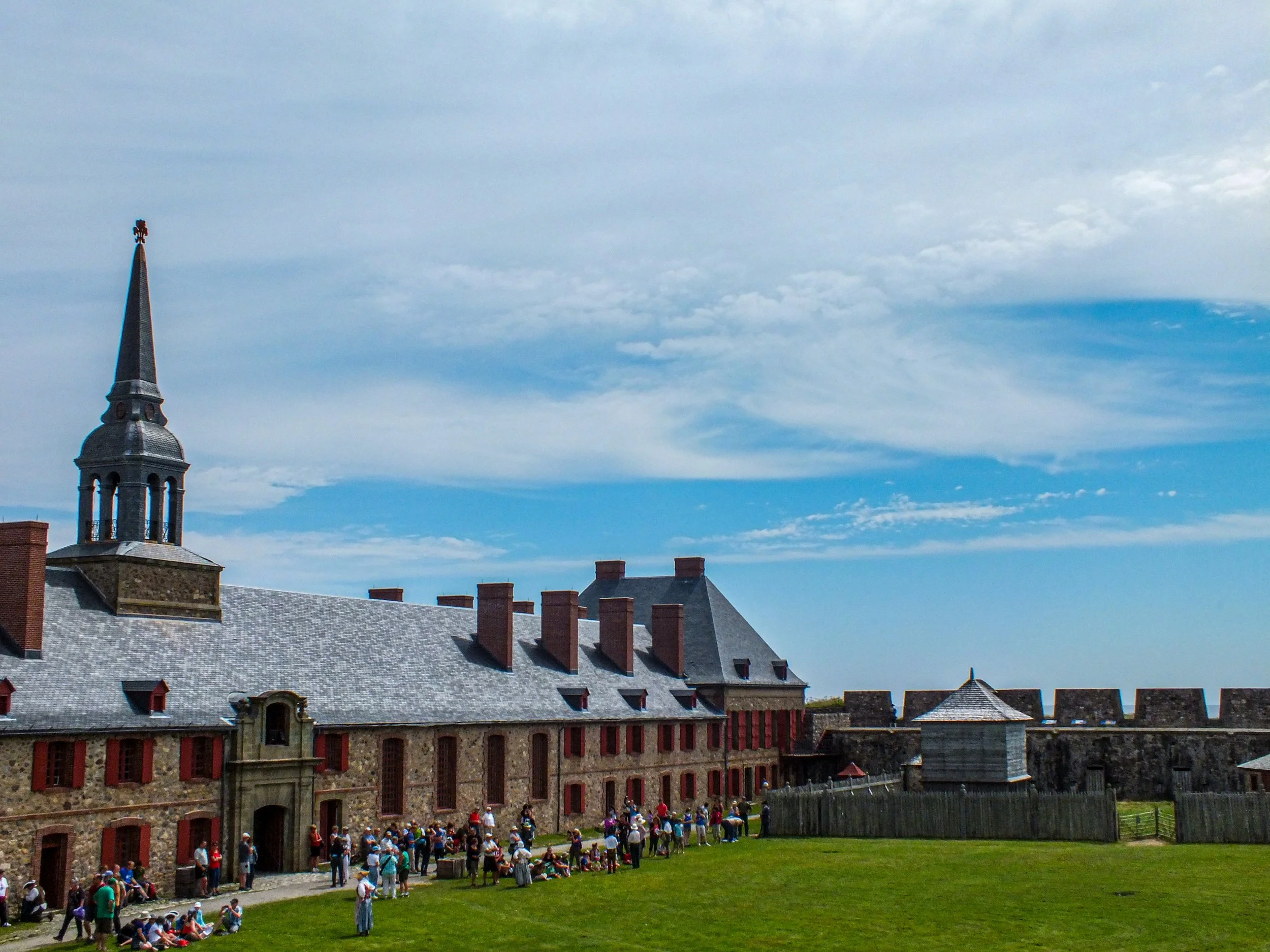
Established by the French, destroyed by the British, rebuilt with love by the Canadians.
A visit to the Fortress of Louisbourg, on the southeast coast of Cape Breton Island in Nova Scotia will transport you back to a time where settlers were trying to build a life, colonial soldiers marched the streets and the battle for North American supremacy was in full swing.
Originally built by the French in 1713. After losing mainland Acadia and Newfoundland to the British, they needed a new foothold on the Atlantic.
It didn’t take long for it to become a thriving colonial settlement. At its peak it had nearly 5000 residents, making a life out of the local cod fishing industry.
But a thriving community, while good for the French, became a threat to the British.
In 1745, Louisbourg came under siege from British forces and after 47 days the French surrendered the fortress.
However, three years later they would get it back in a treaty signed in 1748.
This only gave a brief return of power before Louisbourg became the site of a major turning point of the Seven Years War.
In 1758, the British overtook the French again. After another long and bloody siege, the British barrelled through with 13,000 men, completely overwhelming the French and destroying the fortress. They left nothing but rubble to ensure the French didn’t take back their fortress.
This defeat opened the door for the 1759 British conquest of Quebec, ultimately bringing an end to France’s empire in North America.
Louisbourg lay in ruins for nearly 200 years.
In the 1960’s, the Canadian government, using well established archaeological research and original French documents, rebuilt nearly a quarter of the original fortress in meticulous detail.
Today it operates as a living history museum.
As you make your way through this National Historic Site, you will be immersed in a life that lived long before you were born; before Canada was born.
Kick up the gravel on unpaved roads as you roam through a grid of 18th century buildings. You can explore barracks, see inside homes and storehouses and even stop in and get a drink at the tavern.
At noon, the rifles fire and the cannons echo out over the Atlantic. Men in Red and blue military coats and triangular look hats give each other a nod before lighting the fuse.
Salt from the ocean breeze hits your tongue, gunsmoke sulphur drifts, fife and drum sounds billow through the air.
This place will capture you and take you back to a simpler, yet much more complicated time.
6. big Nickel in Sudbury
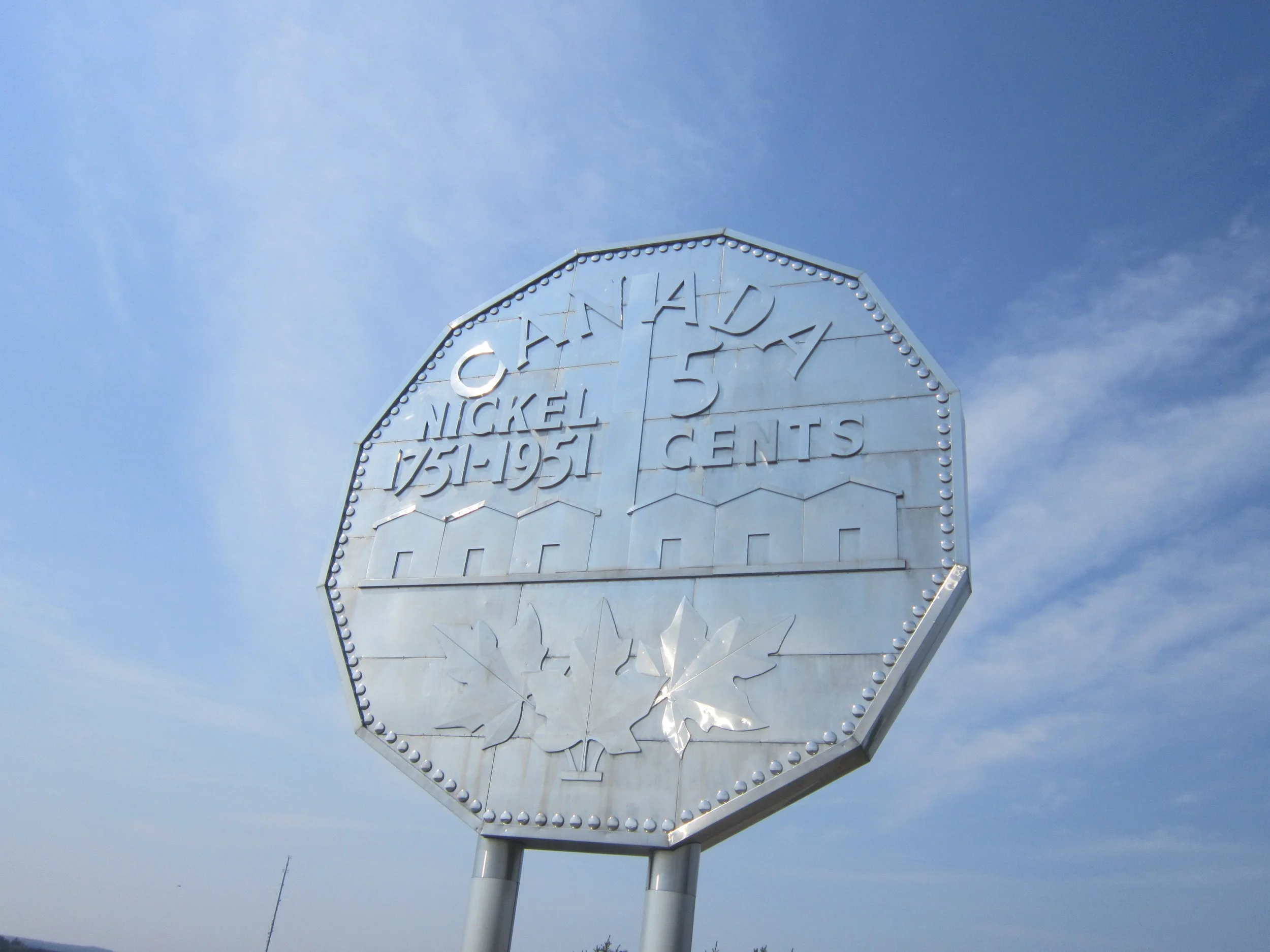
On the outskirts of Sudbury, Ontario, just off of Old Highway 17, the Big Nickel stands 30 feet tall. This iconic local landmark is a tribute to the mining industry that built this region.
In 1883, while blasting through the landscape making way for the Canadian Pacific Railroad, they uncovered a massive reserve of high grade nickel ore, jumpstarting an industry.
The rush was on. Companies like Inco and Falconbridge emerged and turned the region into the world’s leading nickel producer.
Sudbury nickel was used in stainless steel, wartime munitions and modern infrastructure, creating a boom for the small northern town which quickly became a hub of industry.
Canadian folk icon Stompon’ Tom Conners turned life in the nickel mining community into Canadian legend and lore in his classic song Sudbury Saturday night, spotlighting a joyful saturday night after another harsh week in the mines.
“The glasses, they will tinkle as our eyes begin to twinkle. We’ll think no more of Inco on a Sudbury Saturday Night.”
Sadly, such prosperity came with severe damage to the local environment.
Inco’s smokestack spilled black smoke out into the environment, polluting the air and landscape. Trees were clear cut and used for fuel. Local wildlife fled or died.
Since the 70’s massive regreening efforts have successfully transformed the region, recreating a healthy natural environment.
These days, the nickel stands outside the visitors centre for Dynamic Earth, where visitors can descend into a real, preserved nickel mine and experience what conditions are like down there. (They even let me “play with explosives.”)
Whether going down into the mine tour, or just strolling around the park outside, a selfie with the giant nickel is a must have photo for the cross Canada album!
7. Neon Sign Museum, Edmonton
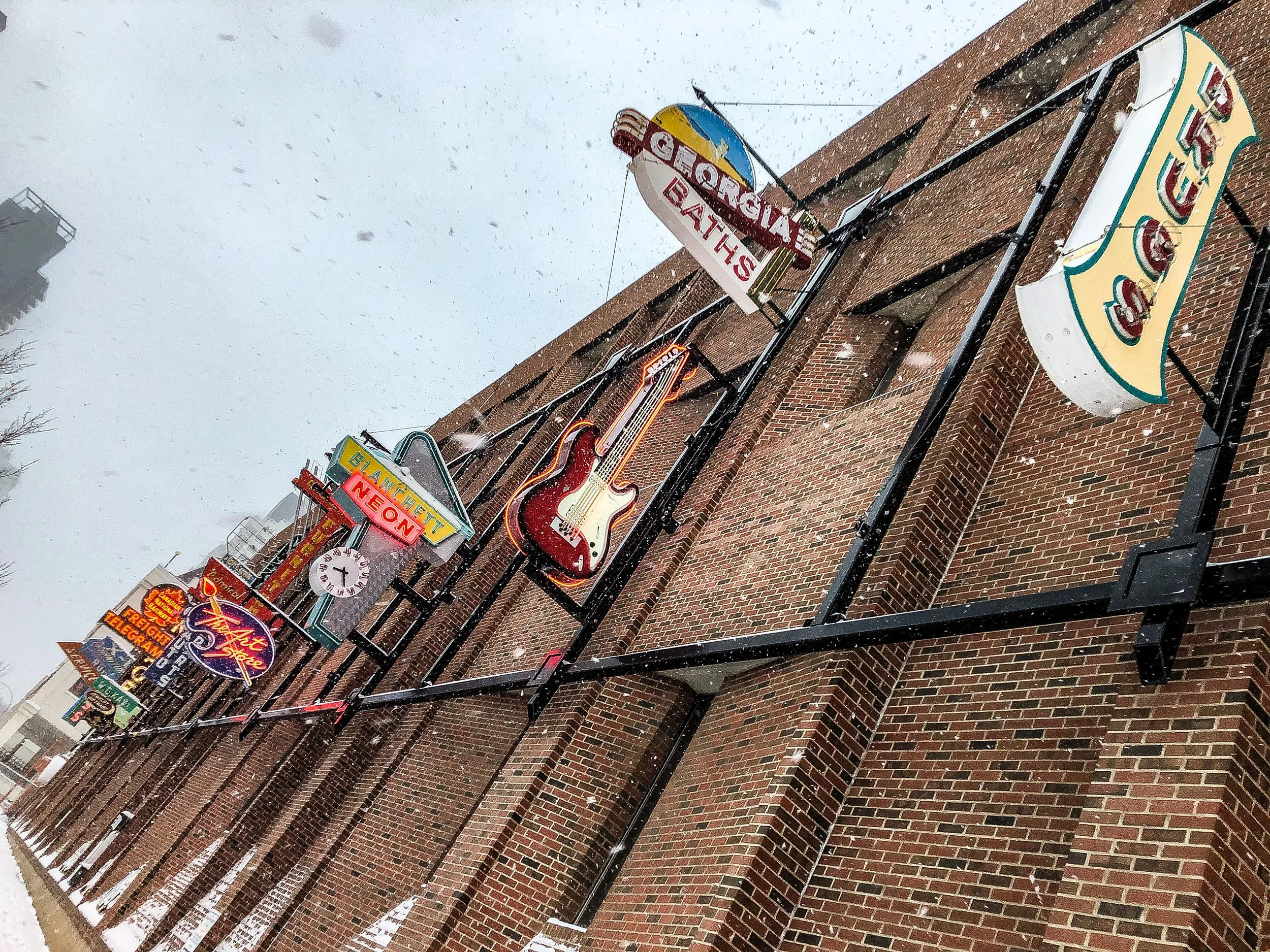
“Neon Alley”, Edmonton’s tribute to the vibrant commercial history of the city.
Located at the corner of 104 and 104 in Edmonton, just around the corner from Rogers Place.
This street is filled with a collection of fully restored neon signs from 20th century Edmonton.
As you walk down the streets, plaques on the wall will tell you all about the history of the signs and the businesses and industries that displayed them.
From drug stores to entertainment venues to railway signage, this collection of neon signs is a fascinating display of art, heritage and commercial history.
Stopping by in the daytime, you can wander up and down the street, reading and learning about the history.
Come back at night to experience the full display of neon light illuminating the street and bringing back a time when advertising on the sidewalk was the centrepiece of a business.
Traveler’s tip: this is a great place to enjoy a little of that legal devil’s lettuce and watch the neon lights flicker against the old red brick.
8. CN tower
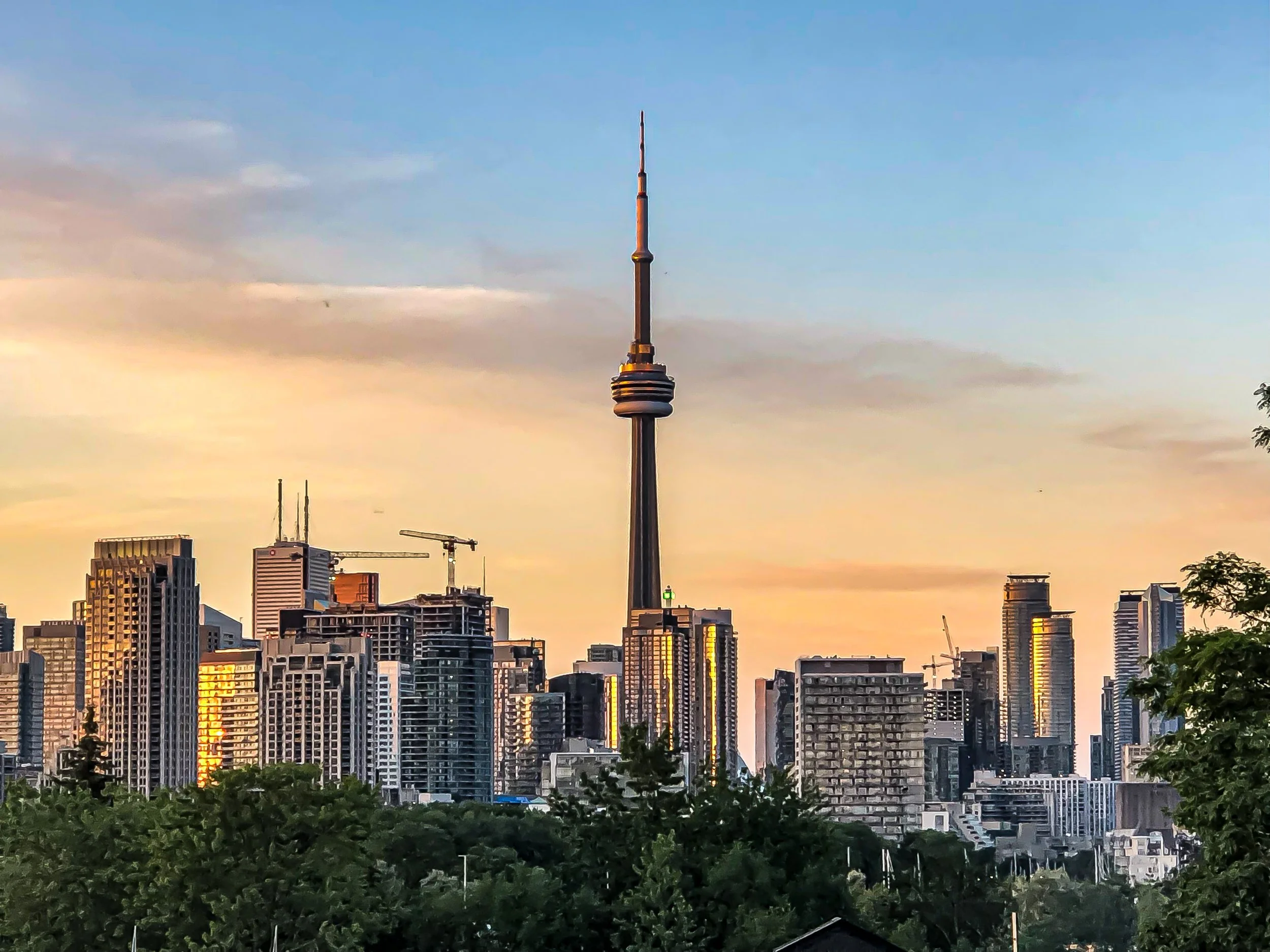
This list wouldn’t be complete without the most iconic building in Canada.
The tallest building in Canada can be seen from miles around in most directions depending on where you are. You can see it from the escarpment in Hamilton, over 50 kilometres away!
It is the focal point of the southern Ontario shoreline. It is the icon of the megalopolis that is the GTA (Greater Toronto Area).
The CN tower was built in 1976 and for 31 years held the record of tallest building in the world (553.3 metres!) before being beat out in 2007 by the Burj Khalifa in Dubai, which stood 555.3 metres.
Nonetheless, the tower still stands as a marvel of engineering and was once named one of the Seven Wonders of the Modern World.
There are so many great points around Toronto to see it.
If you are on foot, I recommend heading down to the Beaver tails and steak a look at it between the buildings, standing like a beacon.
Or head down to Steamwhistle Brewery and crane your neck as you look up at it, wondering how the hell anything could stand so tall.
If you get a chance to take the ferry out to Toronto Island, that’s where you can really get a good look and good photos of the tower nestled into the skyline.
If you are driving into the city, I strongly recommend coming south down the Don Valley Parkway, skimming along the lakeshore before entering into the towering Toronto core, a valley through towers of glass and steel, but the CN Tower is of course, the centrepiece.
But my favourite place to see it? Well, at sunset, about mid August, I love to be on the General admission lawn at the Budweiser Stage, an amphitheatre at Ontario Place, a classic Toronto outdoor concert venue.
Get your lawn tickets, get your beer, bring your doobies, and enjoy the sunset with the tower in view to the right of the stage, the band playing, lights and sounds emanating, and if the date is right, the ferris wheel from the Toronto Exhibition lights up the night to the left of the stage. (That is where the above photo was taken!)
As someone who grew up in Southern Ontario and spent a lot of time driving around Toronto, I have seen the CN tower so many times. Thousands. It never really gets old. I still feel happy when I see it. It’s a symbol of Canada and when im in sight of the CN Tower, I know I’m home.
Ironically enough, I’ve never been up to the top. I’ve never stood on its glass floor or looked out its windows over the city and surrounding landscape, at the wide expanse of Lake Ontario. I’ve never ridden the glass elevator or (like a crazy person) climbed the stairs.
I guess I should put that on my list of things to do. You should too.
9. Terry fox memorial, Thunder Bay
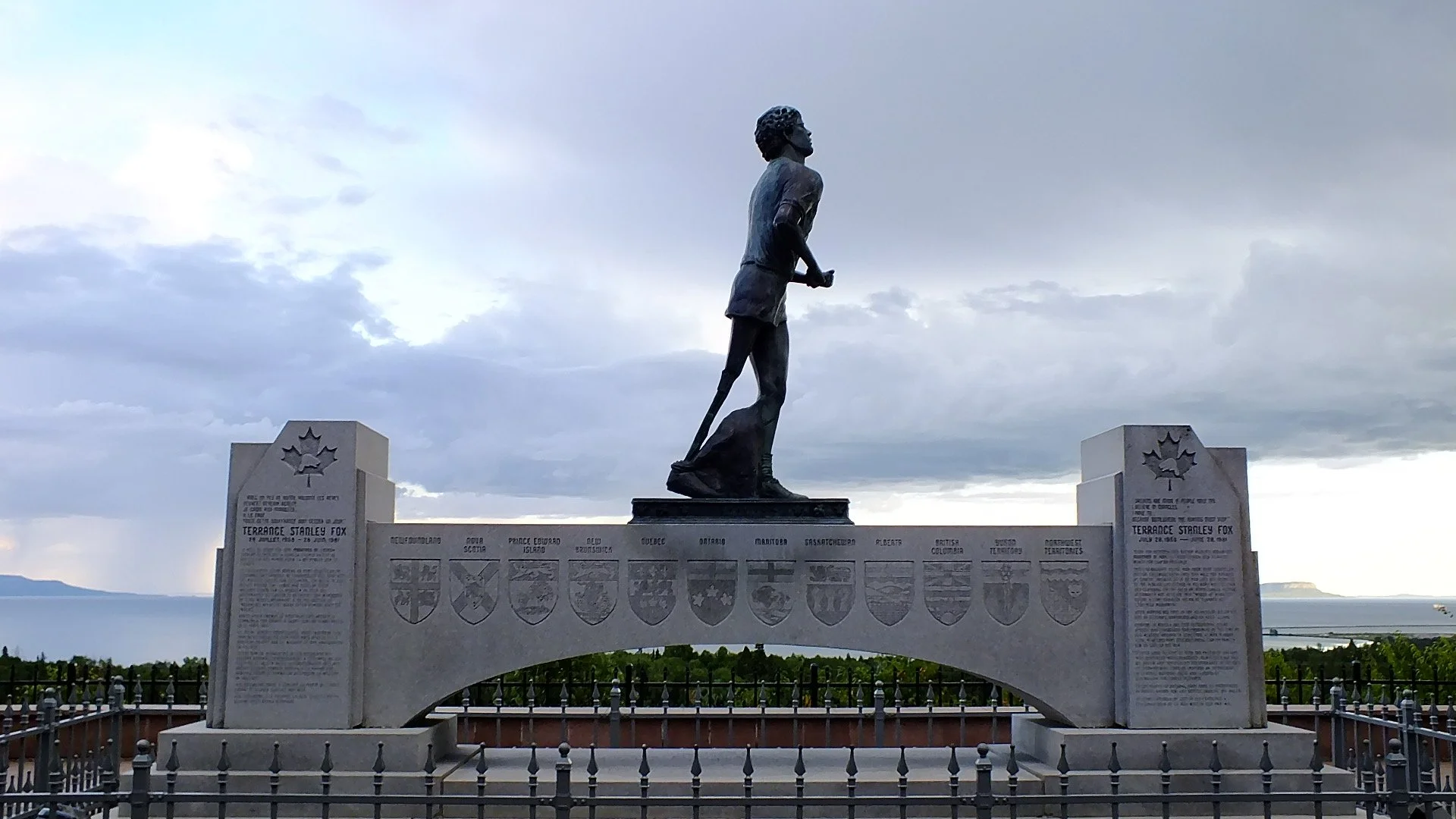
Outside of Thunder Bay, on the side of the road, along the 17/11 stretch of the Trans Canada Highway, stands a tribute to an icon.
Terry Fox is a Canadian Hero, recently voted the greatest Canadian of all time.
Terry was an all star athlete, a fighter, a beacon of hope. When bone cancer took his leg at the age of 18, Terry underwent 16 months of chemotherapy, and became very empathetic towards his fellow cancer patients.
He knew he could do more. He set a goal to raise money for cancer research by running coast to coast, with the aid of a prosthetic leg.
Starting on April 12, 1980, with a dip of the toe in the Atlantic in St. John’s Newfoundland, he had the intention of doing the same when he reached the Pacific.
Terry slowly made progress, running approximately a marathon (26 miles) every day! With a prosthetic leg. I can’t even imagine. But, he did it.
He picked up attention and by the time he reached Ontario, he had met with Prime Minister Pierre Trudeau and other iconic Canadians who gave him their support such as Bobby Orr and Darryl Sittler.
Terry drew a crowd as he ran, hobbling along with intense determination. But sadly, the road and the run was a lot and his cancer caught up with him. It had spread to his lungs, causing him severe lung pain, bringing his run to an end in Thunder Bay, not far from where this monument now stands today.
Terry ran with the hope of raising $1 from every Canadian for cancer research.
In the end, he raised $1.7 Million for cancer research, but inspired an annual run, which continues to raise millions every year.
So, if you are passing through Thunder Bay, stop in and have a break here and pay your respects to Mr. Fox. A man who inspired a nation and made breakthroughs in funding for cancer research in Canada.
A hero, an icon, and a beatiful lookout over Lake Ontario.
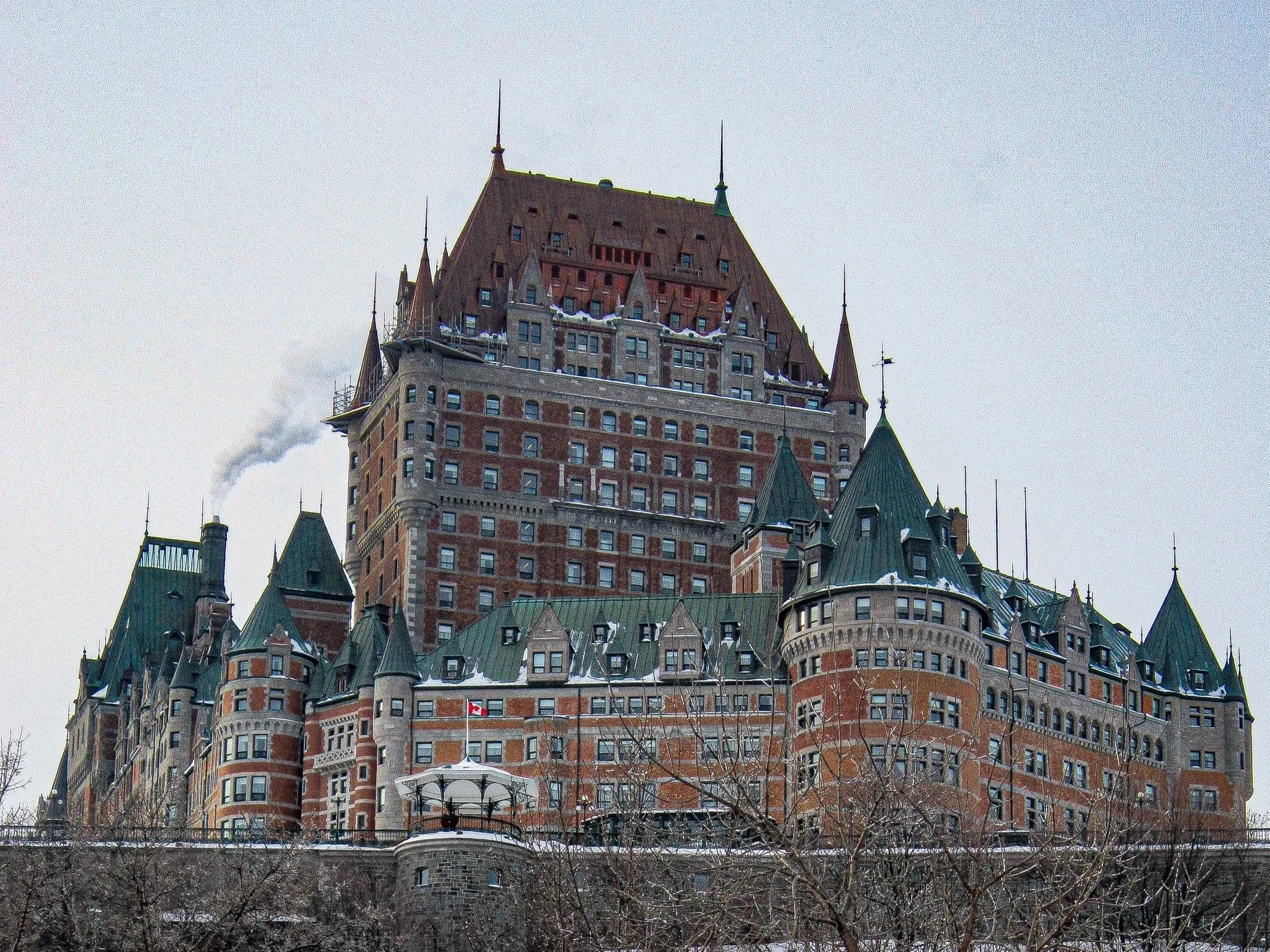
10. chateau Frontenac
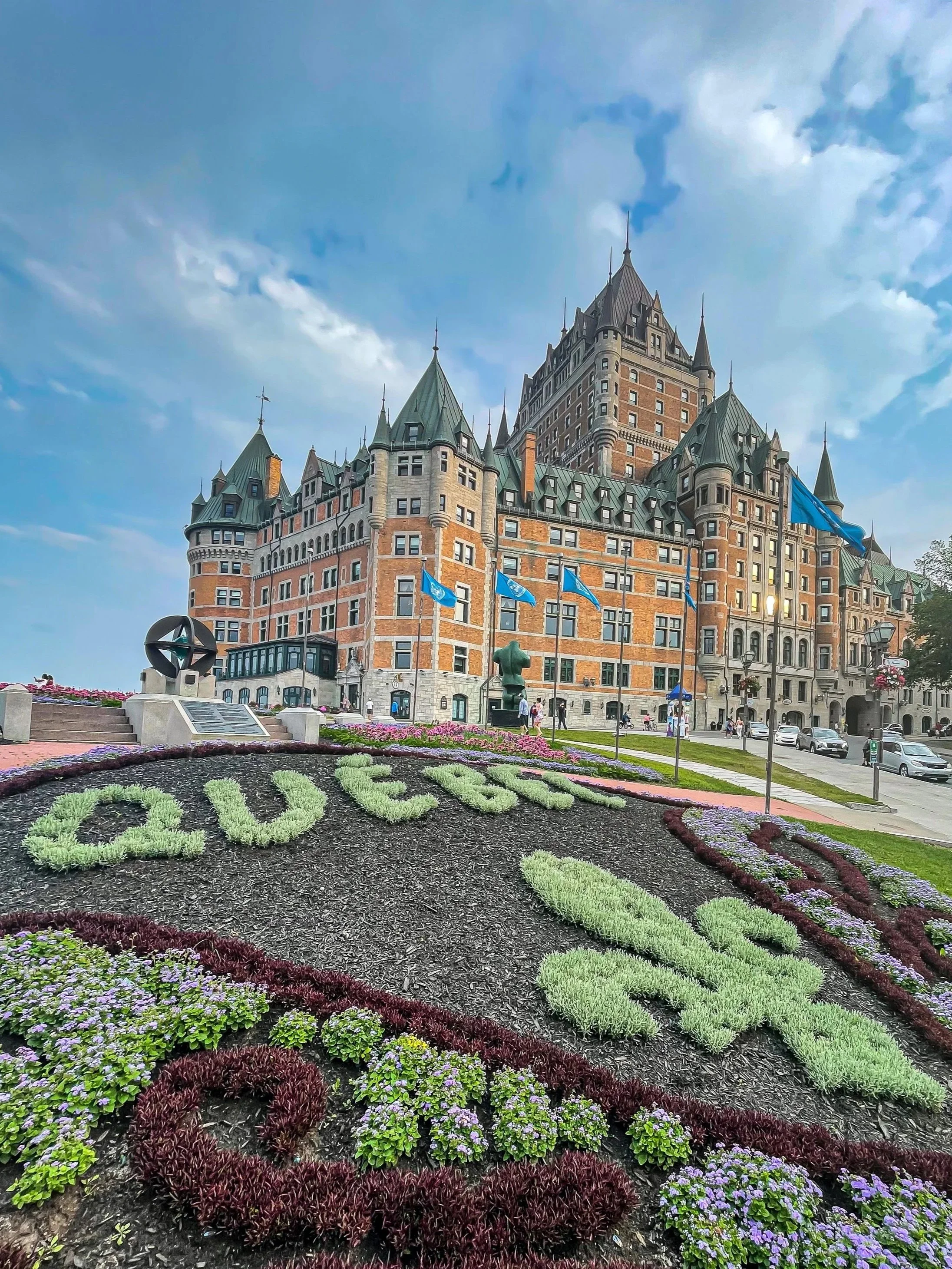
Standing tall atop Cap Diamant, amidst a district as historic as the New World itself, Le Chateau Frontenac, the legendary hotel stands tall over Old Quebec City.
Majestic, historic, iconic.
This is the world’s most photographed hotel. It’s easy to see why.
Vieux-Quebec is my favourite city in the world and this building is at the heart of it. Tall on the cliffs, overlooking the old city, and beyond to the St. Lawrence river.
Admire the views, from lookouts on the Plains of Abraham, to the sights from the promenade out front to the views from of it looming on you from the cobblestone streets of the lower city.
The Hogwarts vibes are real, especially if you visit in the wintertime, it just adds a whole layer of charm to this enchanting city. But no matter what time of year you visit, you can’t help but be transfixed by the architecture of this iconic landmark.
Be sure to add these stops to your bucket list if you plan on touring around Canada!
